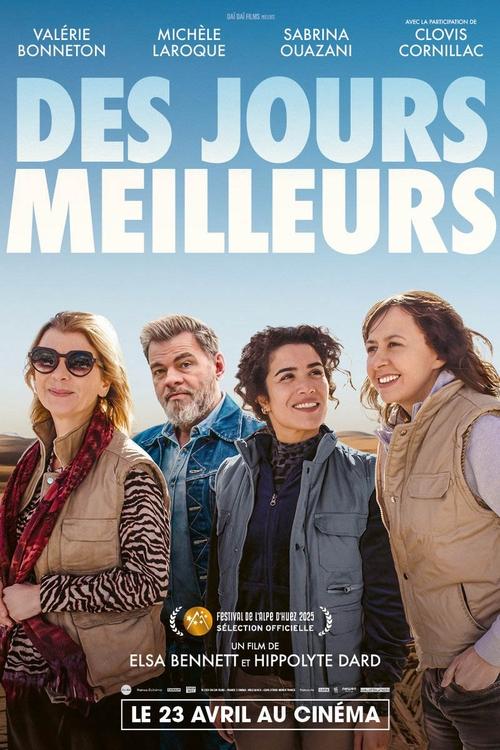
Better Days - Review
"Better Days": A Sandy Road to Redemption, Laughter, and Unexpected Triumph
The desert sun beats down, mirroring the harsh realities faced by Suzanne, Alice, and Diane. "Better Days," the 2025 comedy directed by the rising star Anya Sharma, isn't just a feel-good story about an unlikely team participating in the Dune Rally in Morocco. It's a poignant exploration of resilience, female solidarity, and the transformative power of shared goals in the face of personal adversity. While the premise might sound like a typical underdog sports movie, Sharma expertly blends humor with genuine emotional depth, creating a viewing experience that is both entertaining and deeply moving.
Plot: A Journey of Self-Discovery Disguised as a Rally
The film opens with Suzanne (played with raw vulnerability by Isabelle Moreau), reeling from the devastating loss of her children after a car accident triggered by her alcoholism. Stripped of her parental rights, she's mandated to attend a rehabilitation center. It's here she encounters the boisterous Alice (portrayed with infectious energy by Fatima Diallo) and the stoic Diane (a surprisingly subtle performance from veteran actress Sylvie Dubois). Alice, a perpetual optimist battling a gambling addiction, and Diane, a hardened businesswoman hiding a deep well of loneliness, initially clash with Suzanne's quiet despair. Their paths converge when Denis (played by the charming newcomer, Karim El-Amin), a charismatic sports instructor at the center, proposes an audacious idea: to train them for the grueling Dune Rally in Morocco.
The plot follows the predictable but satisfying arc of an underdog sports movie. We witness the initial resistance, the gradual acceptance, the arduous training montages (accompanied by a surprisingly effective soundtrack blending traditional Moroccan music with contemporary pop), and the inevitable setbacks and triumphs. However, Sharma avoids cliché by focusing on the individual journeys of the three women. The rally becomes a metaphor for their personal battles – a test of their newfound sobriety, their ability to trust each other, and their willingness to fight for a better future. The script, penned by the talented duo of Ben Dubois and Chloe Martin, is sharp and witty, delivering genuinely funny moments without sacrificing emotional resonance.
The pacing is generally well-managed, although the middle act occasionally suffers from predictable training sequences. The film could have benefited from exploring the complexities of Suzanne's relationship with her children in more depth, rather than simply stating it as a motivation. The third act, culminating in the rally itself, is thrilling and visually stunning, with breathtaking shots of the Moroccan desert. The resolution, while heartwarming, might feel slightly too neat for some viewers, but it ultimately serves the film's optimistic message.
Characters: Flawed Individuals, Unbreakable Bonds
The strength of "Better Days" lies in its well-developed and relatable characters. Suzanne's journey from despair to hope is the emotional core of the film. Moreau delivers a nuanced performance, portraying Suzanne's vulnerability and quiet determination with remarkable authenticity. We see her struggle with her addiction, her guilt, and her longing for her children, but also her growing strength and resilience as she finds solace and purpose in the rally.
Alice is the comedic relief, but Diallo imbues her with a surprising depth. Beneath her bubbly exterior lies a deep-seated insecurity and a fear of failure. Her gambling addiction is not treated as a joke, but as a serious problem that she is actively trying to overcome. Her infectious optimism is a source of inspiration for Suzanne and Diane, and her unwavering support is crucial to their success.
Diane is perhaps the most complex character. Dubois plays her with a reserved intensity, revealing her vulnerabilities slowly and deliberately. Initially presented as a cold and unapproachable businesswoman, we gradually learn about her past traumas and her deep-seated loneliness. Her transformation from a cynical loner to a supportive teammate is one of the most rewarding aspects of the film.
Denis, while a supporting character, is also well-developed. El-Amin brings a genuine warmth and empathy to the role, making him a believable and likable mentor. He's not just a sports instructor; he's a compassionate guide who understands the women's struggles and helps them find their inner strength. His patience and dedication are essential to the team's success.
While the core cast shines, some of the supporting characters feel underdeveloped. The other residents of the rehabilitation center are largely relegated to background roles, and their stories are not explored in sufficient detail. This is a missed opportunity to add further layers of complexity to the film's themes.
Direction and Cinematography: Capturing the Beauty and Harshness of the Desert
Anya Sharma's direction is confident and assured. She skillfully balances the comedic and dramatic elements of the story, creating a film that is both entertaining and emotionally resonant. She has a keen eye for detail, and she uses visual storytelling effectively to convey the characters' inner states. The training montages are well-executed, and the rally sequences are thrilling and visually impressive.
The cinematography, by veteran director of photography Jean-Pierre Dubois (no relation to actress Sylvie Dubois), is stunning. He captures the beauty and harshness of the Moroccan desert with breathtaking clarity. The sweeping landscapes, the vibrant colors, and the dramatic lighting create a visually arresting experience. The camera work is dynamic and engaging, drawing the viewer into the heart of the action. The use of drone shots during the rally sequences is particularly effective, providing a sense of scale and excitement.
The editing, by Sophie Leclerc, is generally well-paced, although as mentioned earlier, the middle act could have benefited from some trimming. The transitions between scenes are smooth and seamless, and the overall rhythm of the film is engaging. The use of flashbacks to reveal the characters' backstories is effective, but occasionally feels a bit heavy-handed.
Performances: A Triumph of Ensemble Acting
The performances in "Better Days" are uniformly excellent. Isabelle Moreau delivers a career-defining performance as Suzanne, capturing her vulnerability, her strength, and her ultimate redemption with remarkable authenticity. Fatima Diallo is a revelation as Alice, bringing infectious energy and surprising depth to the role. Sylvie Dubois delivers a nuanced and understated performance as Diane, revealing her vulnerabilities slowly and deliberately. Karim El-Amin is charming and empathetic as Denis, making him a believable and likable mentor.
The chemistry between the three lead actresses is palpable. They convincingly portray the evolution of their relationship from initial animosity to deep friendship. Their shared struggles and triumphs create a strong sense of camaraderie, making their bond all the more believable and moving. The supporting cast is also solid, although as mentioned earlier, some of the characters are underdeveloped.
Themes and Messages: Resilience, Solidarity, and the Pursuit of a Better Future
"Better Days" explores several important themes, including resilience, female solidarity, and the transformative power of shared goals. The film is a testament to the human capacity for overcoming adversity. Suzanne, Alice, and Diane are all flawed individuals who have faced significant challenges in their lives. But they refuse to be defined by their pasts. They find strength in each other, and they work together to build a better future for themselves.
The film also celebrates the power of female solidarity. Suzanne, Alice, and Diane come from different backgrounds and have different personalities, but they find common ground in their shared struggles. They support each other, encourage each other, and inspire each other to be their best selves. The film is a powerful reminder that women can achieve anything when they work together.
Finally, "Better Days" underscores the importance of having a purpose in life. The Dune Rally provides Suzanne, Alice, and Diane with a goal to strive for. It gives them a sense of direction and a reason to keep going, even when things get tough. The film suggests that having a meaningful goal can be a powerful antidote to despair and a catalyst for personal growth.
Comparisons: Echoes of "Little Miss Sunshine" and "Thelma & Louise"
"Better Days" shares some thematic similarities with other films about unlikely teams and journeys of self-discovery. In some ways, it echoes the quirky humor and heartwarming message of "Little Miss Sunshine," with its focus on a dysfunctional family coming together to support a common goal. However, "Better Days" is arguably more emotionally complex and tackles more serious issues, such as addiction and loss of parental rights.
The film also draws inspiration from "Thelma & Louise," with its depiction of women breaking free from societal expectations and forging their own paths. However, "Better Days" is ultimately a more optimistic and hopeful film, focusing on redemption and reconciliation rather than rebellion and escape. The Moroccan setting also provides a unique visual and cultural backdrop that distinguishes it from other similar films.
Anya Sharma's previous work, the critically acclaimed indie drama "Silent Echoes," explored similar themes of resilience and female empowerment. However, "Better Days" represents a significant departure in terms of tone and genre. While "Silent Echoes" was a dark and introspective film, "Better Days" is a lighter and more accessible comedy. This demonstrates Sharma's versatility as a director and her willingness to experiment with different styles and approaches.
Positive Aspects: A Winning Combination of Humor, Heart, and Stunning Visuals
There is much to admire in "Better Days." The film's strengths include its well-developed characters, its sharp and witty script, its confident direction, its stunning cinematography, and its excellent performances. The film is both entertaining and emotionally resonant, offering a satisfying blend of humor, heart, and visual spectacle. The themes of resilience, female solidarity, and the pursuit of a better future are timely and relevant, and the film's optimistic message is ultimately uplifting.
The chemistry between the three lead actresses is particularly noteworthy. They convincingly portray the evolution of their relationship from initial animosity to deep friendship. The Moroccan setting adds a unique and exotic flavor to the film, and the rally sequences are thrilling and visually impressive. The soundtrack is also well-chosen, blending traditional Moroccan music with contemporary pop to create a dynamic and engaging listening experience.
Constructive Criticism: Room for Improvement in Pacing and Subplot Development
While "Better Days" is a highly enjoyable film, it is not without its flaws. As mentioned earlier, the middle act occasionally suffers from predictable training sequences and could have benefited from some trimming. The film could have also explored the complexities of Suzanne's relationship with her children in more depth, rather than simply stating it as a motivation. The supporting characters are somewhat underdeveloped, and their stories are not explored in sufficient detail.
The resolution, while heartwarming, might feel slightly too neat for some viewers. A more nuanced and ambiguous ending could have added further depth and complexity to the film's themes. While the film does an excellent job of balancing the comedic and dramatic elements, there are moments where the humor feels a bit forced or out of place. A more subtle and organic approach to comedy could have enhanced the film's overall emotional impact.
Conclusion: A Heartwarming and Inspiring Journey Worth Taking
"Better Days" is a heartwarming and inspiring film that celebrates the power of resilience, female solidarity, and the pursuit of a better future. Anya Sharma has crafted a compelling story with well-developed characters, sharp dialogue, and stunning visuals. While the film has some minor flaws in terms of pacing and subplot development, its strengths far outweigh its weaknesses. The performances are uniformly excellent, and the chemistry between the three lead actresses is palpable. The film's optimistic message is ultimately uplifting, making it a rewarding and enjoyable viewing experience.
Overall, "Better Days" is a film that will leave you feeling good about the world and inspired to overcome your own challenges. It's a must-see for fans of feel-good comedies, underdog sports movies, and stories about female empowerment. It's a film that will stay with you long after the credits have rolled.