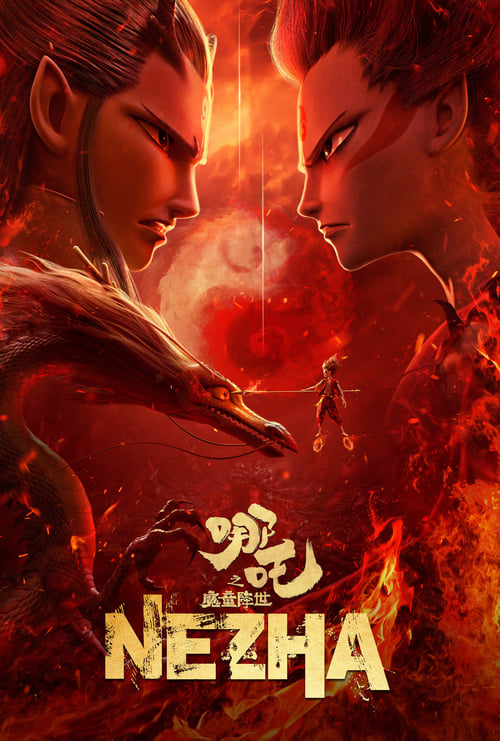
Ne Zha - Review
"Ne Zha": A Fiery Reimagining of a Classic Legend – Review
From the depths of Chinese mythology rises a hero unlike any other. Not born of virtue, but burdened by a demonic destiny, Ne Zha explodes onto the screen in a visually stunning and emotionally resonant animated adventure. Released in 2019, this film isn't just another animated feature; it's a cultural phenomenon that redefined Chinese animation and captivated audiences worldwide. But does the fiery spirit of Ne Zha truly ignite, or does it flicker and fade under the weight of its own ambition? Let's delve into the heart of this captivating film.
Plot: Defying Destiny, Forging a Legend
The narrative of "Ne Zha" centers around the titular character, a mischievous and powerful child destined to bring destruction to the world. Born with immense demonic energy, he is feared and ostracized by the villagers of Chen Tang Guan. Lord Li Jing, his father, is tasked with raising Ne Zha and ultimately preventing him from fulfilling the prophecy of annihilation. However, the prophecy is further complicated by the existence of Ao Bing, the Dragon Prince, destined to save the world but secretly plotting its destruction due to his own tragic circumstances.
The film cleverly utilizes the familiar framework of the classic "Investiture of the Gods" mythology, but it boldly reimagines the character of Ne Zha. Instead of a purely righteous figure, he is presented as a flawed and misunderstood anti-hero. This subversion of expectations is one of the film's greatest strengths. The plot unfolds with a compelling mix of action, comedy, and drama. The pacing is generally brisk, keeping the audience engaged throughout. However, the sheer volume of information and characters introduced, particularly in the early stages, can feel slightly overwhelming.
The central conflict revolves around Ne Zha's internal struggle against his predetermined fate. He grapples with the inherent darkness within him, fighting to prove that he is more than just a vessel for destruction. This internal battle is mirrored by his external conflict with the villagers, who see him as a monster despite his genuine attempts at good deeds. The introduction of Ao Bing adds another layer of complexity to the narrative, creating a compelling duality of good and evil, destiny and choice.
Characters: Beyond Good and Evil
The characters in "Ne Zha" are richly developed and contribute significantly to the film's emotional depth.
Ne Zha
Ne Zha is the heart and soul of the film. Voiced with remarkable energy and vulnerability, he is a complex and compelling protagonist. His initial mischievousness and rebellious streak are understandable given his isolation and the constant fear he inspires. As the story progresses, we see him struggle with his inherent demonic power and his desire to be accepted. His transformation from a destructive force to a reluctant hero is both believable and inspiring. His design, a blend of cute and menacing, perfectly reflects his internal conflict.
Lord Li Jing
Ne Zha's father, Lord Li Jing, is a stern and duty-bound figure. Initially, he appears cold and distant, willing to sacrifice his son to save the village. However, as the film progresses, we see his unwavering love and dedication to his son. He embodies the traditional values of duty and sacrifice, but his character is nuanced by his internal conflict between protecting his people and saving his son's soul.
Lady Yin
Ne Zha's mother, Lady Yin, provides a much-needed counterbalance to Lord Li Jing's stoicism. She is a fierce and compassionate warrior who fiercely protects her son. Her unwavering belief in Ne Zha's potential for good is a driving force in his journey. She is a strong female character who defies traditional gender roles and adds depth to the family dynamic.
Ao Bing
Ao Bing, the Dragon Prince, is a tragic figure burdened by his own destiny. He is initially presented as a noble and virtuous hero, but his true nature is revealed as the story progresses. He represents the corrupting influence of power and the dangers of blind obedience. His internal conflict between his duty and his desire for acceptance mirrors Ne Zha's struggle, creating a compelling parallel between the two characters.
Taiyi Zhenren
Taiyi Zhenren, Ne Zha's master, is a comedic and eccentric figure who provides much-needed levity to the film. He is a powerful immortal with a penchant for drinking and a less-than-stellar track record as a teacher. Despite his flaws, he genuinely cares for Ne Zha and guides him on his journey. His character serves as a reminder that even the most powerful beings are not perfect.
While the main characters are well-developed, some of the supporting characters feel somewhat underdeveloped. The villagers, for example, are often portrayed as a faceless mob, lacking individual personalities. This can detract from the emotional impact of their fear and prejudice towards Ne Zha.
Direction: A Masterful Blend of Action and Emotion
Jiaozi (Yang Yu), the director and writer of "Ne Zha," delivers a masterful blend of action, comedy, and emotion. His vision is clear and consistent throughout the film, creating a cohesive and engaging narrative. He demonstrates a strong understanding of both traditional Chinese mythology and modern storytelling techniques.
Jiaozi's direction is particularly effective in the action sequences. The fight choreography is dynamic and visually stunning, showcasing the characters' powers and abilities in creative and exciting ways. The use of slow-motion and dynamic camera angles enhances the impact of the action, immersing the audience in the heat of battle.
However, Jiaozi's greatest achievement lies in his ability to balance the action with emotional depth. He skillfully portrays the characters' internal struggles and their relationships with each other. The film is not afraid to explore complex themes such as destiny, prejudice, and redemption. The emotional moments are often punctuated by moments of humor, preventing the film from becoming overly sentimental.
While Jiaozi's direction is generally excellent, there are moments where the pacing feels slightly uneven. The exposition in the early stages of the film can feel rushed, and some plot points are not fully explained. This can lead to confusion for viewers who are unfamiliar with Chinese mythology.
Cinematography: A Visual Feast
The cinematography in "Ne Zha" is nothing short of breathtaking. The film is a visual feast, showcasing the beauty and grandeur of Chinese landscapes and the power of its mythical creatures. The animation is fluid and expressive, bringing the characters to life with remarkable detail.
The use of color is particularly effective in creating mood and atmosphere. The vibrant colors of the immortal realm contrast sharply with the muted tones of the mortal world, highlighting the divide between the two realms. The use of fire and water imagery is also significant, representing the opposing forces of Ne Zha and Ao Bing.
The character designs are unique and memorable. Ne Zha's design, in particular, is a standout. His mischievous grin, sharp teeth, and flaming eyes perfectly capture his rebellious spirit. The designs of the other characters are equally impressive, reflecting their personalities and roles in the story.
The visual effects are seamlessly integrated into the animation, creating a believable and immersive world. The use of CGI is particularly impressive in the action sequences, allowing for dynamic and visually stunning displays of power. However, there are a few moments where the CGI feels slightly dated, particularly in the rendering of certain textures.
Performances: Voices That Resonate
The voice acting in "Ne Zha" is exceptional, bringing the characters to life with nuance and emotion. The voice actors perfectly capture the personalities of their respective characters, adding depth and dimension to their performances.
The voice actor for Ne Zha delivers a particularly impressive performance, capturing the character's mischievousness, vulnerability, and determination. The voice actors for Lord Li Jing and Lady Yin also deliver strong performances, conveying the characters' love and dedication to their son.
The voice acting for Ao Bing is equally compelling, capturing the character's internal conflict and his struggle against his predetermined fate. The voice actor for Taiyi Zhenren provides much-needed comedic relief, delivering his lines with perfect timing and inflection.
While the voice acting is generally excellent, the English dub suffers from some inconsistencies in tone and delivery. Some of the jokes do not translate well, and some of the emotional moments lack the same impact as the original Chinese version. However, the overall quality of the dub is still commendable.
Themes and Messages: Defying Fate, Embracing Choice
"Ne Zha" explores several complex themes, including destiny, prejudice, and redemption. The film challenges the notion that individuals are bound by their predetermined fate, arguing that they have the power to choose their own path. Ne Zha's struggle against his demonic destiny is a powerful metaphor for the human capacity to overcome adversity and choose good over evil.
The film also addresses the issue of prejudice and the dangers of judging individuals based on their origins or appearances. Ne Zha is ostracized and feared by the villagers because of his demonic nature, even though he has not yet committed any evil acts. The film highlights the importance of empathy and understanding, urging viewers to look beyond superficial differences and see the humanity in others.
Ultimately, "Ne Zha" is a story about redemption. Ne Zha makes mistakes and causes harm, but he ultimately chooses to use his powers for good, saving the villagers from destruction. The film demonstrates that it is never too late to change one's path and that even the most flawed individuals are capable of redemption.
Comparison to Other Films
"Ne Zha" can be compared to other animated films that explore similar themes of destiny and choice, such as "How to Train Your Dragon" and "Kung Fu Panda." Like Hiccup in "How to Train Your Dragon," Ne Zha is an outcast who defies expectations and forges his own path. Like Po in "Kung Fu Panda," Ne Zha is initially dismissed as an unlikely hero but ultimately proves his worth through his courage and determination.
In terms of visual style, "Ne Zha" draws inspiration from both Western and Eastern animation traditions. The character designs and action sequences are reminiscent of Japanese anime, while the overall aesthetic is rooted in Chinese art and culture. The film's success has paved the way for other Chinese animated features, such as "Jiang Ziya," which also reimagines classic mythological figures.
Comparing "Ne Zha" to previous works by Jiaozi is difficult, as this is his most significant and successful film to date. However, the film demonstrates his growth as a director and writer, showcasing his ability to create complex and engaging characters and stories.
Positive Aspects
- Stunning animation and visual effects
- Compelling characters and storyline
- Excellent voice acting
- Exploration of complex themes
- Successful blend of action, comedy, and drama
- Reimagining of a classic legend
Constructive Criticism
- Pacing can be uneven at times
- Some plot points are not fully explained
- Supporting characters could be more developed
- English dub suffers from some inconsistencies
- Some CGI elements feel slightly dated
Conclusion
"Ne Zha" is a triumph of Chinese animation, a visually stunning and emotionally resonant film that redefines the boundaries of the genre. With its compelling characters, dynamic action sequences, and exploration of complex themes, "Ne Zha" is a must-see for fans of animation and mythology alike. While the film has a few minor flaws, its strengths far outweigh its weaknesses. It's a testament to the power of storytelling and a reminder that even the most unlikely heroes can change their destiny. "Ne Zha" is not just a great animated film; it's a cultural milestone that will undoubtedly inspire future generations of filmmakers.
Rating: 9.5/10