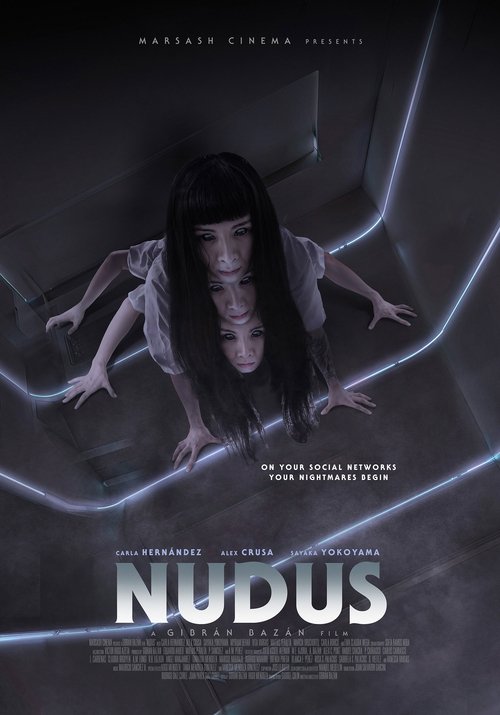
Nudus - Review
Nudus (2024): A Chilling Descent into Data Privacy Horror
Imagine waking up not just from a coma, but from a nightmare where the very fabric of your identity has been meticulously dissected and weaponized against you. This is the unsettling reality that awaits the protagonist in "Nudus," a 2024 horror-thriller that plunges viewers into the terrifying implications of unchecked data collection and the erosion of personal privacy. Released on April 11th, "Nudus" isn't just another jump-scare fest; it's a slow-burn psychological torment that lingers long after the credits roll, forcing us to confront our own digital vulnerabilities. Prepare to question everything you thought you knew about security and control in the age of information.
Plot: A Tangled Web of Surveillance and Control
The film opens with Anna (played by the remarkable Sarah Jenkins), disoriented and struggling to piece together her fragmented memories. She's been in a coma for an unspecified amount of time, the victim of a brutal attack that left her clinging to life. As she slowly regains consciousness, she discovers that the institution caring for her – a sleek, sterile facility shrouded in secrecy – isn't offering genuine help. Instead, it becomes chillingly clear that they are the very architects of her suffering.
Anna soon learns that her captors, a shadowy organization known only as "The Collective," possess an unnerving level of detail about her life. They have access to her emails, social media accounts, browsing history, even biometric data collected from ubiquitous surveillance devices. This information isn't just used for observation; it's actively manipulated to control her thoughts, emotions, and actions. They exploit her deepest fears, her hidden desires, and her past traumas, turning her own memories into instruments of torture.
The plot unfolds as a desperate cat-and-mouse game. Anna, weakened and confused, must navigate the labyrinthine facility while simultaneously battling the psychological warfare waged against her. She forms tentative alliances with other patients, each bearing their own scars from The Collective's experiments. These alliances are fraught with suspicion and betrayal, as Anna struggles to discern who she can truly trust. The narrative masterfully weaves together elements of classic psychological thrillers with a contemporary science fiction edge, creating a unique and unsettling experience.
The central mystery revolves around the purpose of The Collective's experiments. Are they simply seeking to control individuals, or is there a more sinister agenda at play? As Anna delves deeper, she uncovers a conspiracy that reaches the highest levels of power, implicating corporations, governments, and even members of her own family. The revelation of the truth is both shocking and deeply disturbing, forcing Anna to confront the uncomfortable reality that her life has been a carefully orchestrated illusion.
Characters: Victims and Manipulators
Anna (Sarah Jenkins): The heart and soul of the film, Anna is a compelling protagonist whose vulnerability and resilience resonate deeply. Jenkins delivers a tour-de-force performance, capturing Anna's initial confusion and fear with raw authenticity. As Anna gains clarity and begins to fight back, Jenkins imbues her with a steely determination that is both inspiring and heartbreaking. We root for her every step of the way, even when her choices are questionable.
Dr. Silas Thorne (Elias Vance): The enigmatic and chillingly calm head of The Collective, Dr. Thorne is a master manipulator who believes he is acting in the best interests of humanity. Vance portrays him with a subtle charisma that makes his actions all the more terrifying. He's not a mustache-twirling villain; he's a deeply intelligent and disturbingly rational man who has convinced himself that his methods are justified. His interactions with Anna are particularly unsettling, as he attempts to gaslight her into believing that her suffering is for the greater good.
Marcus (David Chen): A fellow patient who initially appears to be an ally, Marcus adds a layer of moral ambiguity to the narrative. Chen's performance is nuanced, leaving the audience constantly questioning his true motives. Is he genuinely trying to help Anna, or is he secretly working for The Collective? His character serves as a reminder that in a world of constant surveillance, trust is a rare and precious commodity.
Elara (Isabelle Moreau): Another patient who becomes a close confidante of Anna, Elara provides valuable insights into the inner workings of The Collective. Moreau's portrayal is both vulnerable and strong, showcasing Elara's own struggles with trauma and her unwavering determination to escape. Her character offers a glimmer of hope in an otherwise bleak and oppressive environment.
Direction: A Masterclass in Tension Building
Director Olivia Hayes demonstrates a masterful command of suspense and atmosphere in "Nudus." She expertly crafts a claustrophobic and unsettling environment, using tight camera angles, stark lighting, and a haunting score to amplify the sense of dread. The pacing is deliberately slow, allowing the tension to build gradually until it reaches a fever pitch. Hayes avoids relying on cheap jump scares, instead opting for psychological horror that preys on the audience's deepest fears.
Her use of flashbacks is particularly effective, providing glimpses into Anna's past while simultaneously blurring the lines between reality and illusion. These fragmented memories are often distorted and manipulated, leaving the audience questioning what is real and what is fabricated by The Collective. Hayes skillfully uses these techniques to create a sense of disorientation and paranoia, mirroring Anna's own mental state.
Hayes also excels at creating a visually striking film. The sterile, minimalist design of the facility is both beautiful and terrifying, reflecting the cold, clinical nature of The Collective's experiments. The use of technology is seamlessly integrated into the narrative, highlighting the pervasive nature of surveillance in modern society. Hayes doesn't shy away from depicting the physical and psychological toll of Anna's ordeal, but she does so with a sensitivity that avoids gratuitous violence.
Cinematography: A Visual Symphony of Dread
The cinematography by Mark Olsen is a crucial element in creating the film's oppressive atmosphere. Olsen employs a variety of techniques to heighten the sense of unease, including:
- Low-key lighting: Shadows are used extensively to create a sense of mystery and foreboding.
- Tight framing: Characters are often framed in close-ups, emphasizing their vulnerability and isolation.
- Unsettling camera angles: Dutch angles and other unconventional shots are used to create a sense of disorientation.
- Color palette: The film's color palette is dominated by cool blues and grays, reflecting the cold and sterile environment.
Olsen's use of visual metaphors is also noteworthy. For example, reflections are used to symbolize Anna's fractured identity and her struggle to distinguish between reality and illusion. Surveillance cameras are omnipresent, serving as a constant reminder of The Collective's watchful gaze. The cinematography is not just visually stunning; it's an integral part of the storytelling, enhancing the film's themes and messages.
Performances: A Stellar Cast Brings the Nightmare to Life
As mentioned earlier, Sarah Jenkins delivers a career-defining performance as Anna. Her ability to convey a wide range of emotions, from fear and confusion to anger and determination, is truly remarkable. She embodies the character's vulnerability and resilience, making her a compelling and relatable protagonist.
Elias Vance is equally impressive as Dr. Thorne. He manages to portray a character who is both intelligent and deeply unsettling, blurring the lines between good and evil. His calm demeanor and persuasive arguments make his actions all the more terrifying. Vance's performance is a masterclass in understated villainy.
The supporting cast is also strong, with David Chen and Isabelle Moreau delivering memorable performances as Marcus and Elara, respectively. They add depth and complexity to the narrative, making the world of "Nudus" feel more real and lived-in. Overall, the cast elevates the film to another level, bringing the characters and their struggles to life in a way that is both believable and emotionally resonant.
Themes and Messages: Data Privacy and the Erosion of Identity
"Nudus" is more than just a horror-thriller; it's a timely and relevant commentary on the dangers of unchecked data collection and the erosion of personal privacy in the digital age. The film raises important questions about the ethical implications of surveillance technology and the potential for abuse.
One of the central themes of the film is the idea that information is power. The Collective's ability to control Anna stems directly from their access to her personal data. They use this information to manipulate her thoughts, emotions, and actions, effectively turning her into a puppet. The film serves as a cautionary tale about the importance of protecting our personal information and being aware of the potential consequences of sharing it online.
Another key theme is the erosion of identity. As Anna's memories are manipulated and her sense of reality is distorted, she struggles to maintain her sense of self. The Collective seeks to strip her of her individuality, turning her into a blank slate that can be molded to their will. The film explores the idea that our memories and experiences are what define us, and that the loss of these things can be devastating.
The film also touches on the themes of trust and betrayal. In a world of constant surveillance, it becomes increasingly difficult to know who to trust. Anna's relationships with other patients are fraught with suspicion and doubt, as she struggles to discern who is genuinely trying to help her and who is secretly working for The Collective. The film suggests that in a society where privacy is under constant threat, trust becomes a rare and precious commodity.
Finally, "Nudus" raises questions about the responsibility of technology companies and governments. The film suggests that these entities have a moral obligation to protect the privacy of individuals and to prevent the abuse of surveillance technology. It serves as a call to action, urging viewers to demand greater transparency and accountability from those who collect and control our data.
Comparison to Similar Films and Previous Works
"Nudus" draws inspiration from a variety of sources, including classic psychological thrillers like "The Prisoner" and "The Manchurian Candidate," as well as contemporary science fiction films like "Gattaca" and "Minority Report." It also shares thematic similarities with episodes of "Black Mirror," particularly those that explore the dark side of technology.
Compared to these films, "Nudus" offers a more nuanced and subtle exploration of the themes of data privacy and surveillance. It avoids the flashy action sequences and dystopian landscapes of some science fiction films, instead focusing on the psychological toll of constant surveillance on the individual. The film's slow-burn pacing and emphasis on character development set it apart from more conventional horror-thrillers.
Olivia Hayes' previous work includes the critically acclaimed indie film "Echoes," a psychological drama that explored themes of memory and identity. "Nudus" represents a significant step forward in her career, showcasing her ability to craft a suspenseful and thought-provoking narrative on a larger scale. The film also demonstrates her skill at directing actors, eliciting strong performances from the entire cast.
Sarah Jenkins, who stars as Anna, has previously appeared in a number of independent films and television shows. Her performance in "Nudus" is a breakout role, establishing her as a rising star in the industry. Her ability to convey complex emotions and her commitment to the character make her a compelling and believable protagonist.
Positive Aspects
"Nudus" excels in several key areas:
- Compelling Narrative: The plot is intricate and engaging, keeping viewers on the edge of their seats from beginning to end.
- Strong Performances: The cast delivers outstanding performances, particularly Sarah Jenkins as Anna and Elias Vance as Dr. Thorne.
- Masterful Direction: Olivia Hayes demonstrates a skillful command of suspense and atmosphere, creating a truly unsettling experience.
- Thought-Provoking Themes: The film raises important questions about data privacy, surveillance, and the erosion of identity.
- Visually Stunning: The cinematography and production design are top-notch, creating a visually striking and immersive world.
Constructive Criticism
While "Nudus" is a highly effective film, there are a few areas where it could have been improved:
- Pacing: The slow-burn pacing may not appeal to all viewers. Some may find the film to be too slow at times, particularly in the first act.
- Clarity: The plot can be somewhat convoluted at times, requiring close attention from the audience. A few scenes could have been clarified to improve understanding.
- Ending: The ending is somewhat ambiguous, which may leave some viewers feeling unsatisfied. A more definitive resolution could have strengthened the film's overall impact.
Conclusion
"Nudus" is a chilling and thought-provoking horror-thriller that will stay with you long after the credits roll. It's a timely and relevant commentary on the dangers of unchecked data collection and the erosion of personal privacy in the digital age. While the slow-burn pacing and ambiguous ending may not appeal to all viewers, the film's compelling narrative, strong performances, masterful direction, and visually stunning cinematography make it a must-see for fans of psychological thrillers and science fiction.
Prepare to be unnerved, to question your digital footprint, and to reflect on the true cost of convenience in an age where privacy is becoming a relic of the past. "Nudus" is not just a movie; it's a warning.