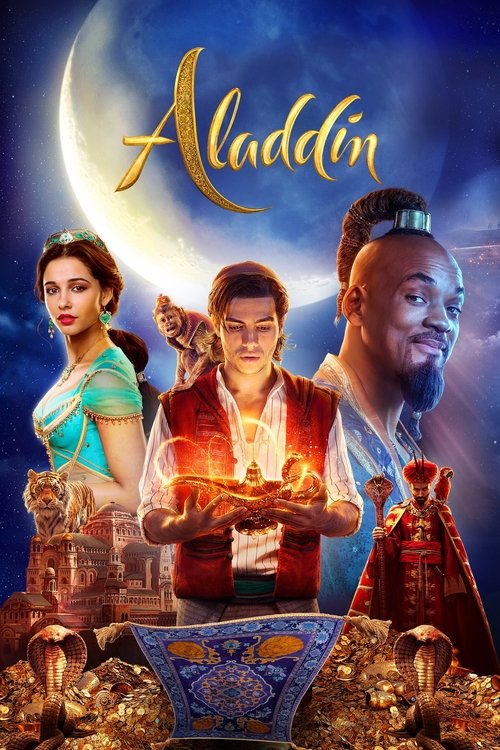
Aladdin - Review
A Whole New World, Reimagined: A Review of Disney's 2019 Aladdin
Disney's live-action remakes have become a cinematic phenomenon, often met with a mix of anticipation and trepidation. Would they recapture the magic of the animated classics, or would they fall flat, mere shadows of their beloved predecessors? Aladdin (2019), directed by Guy Ritchie, entered this arena with a considerable amount of pressure. The original 1992 animated film is a near-perfect blend of adventure, humor, romance, and unforgettable music, making a live-action adaptation a daunting task. Did Ritchie and his team manage to bottle the lightning again? Let's delve into the Agrabah marketplace and uncover the treasures (and perhaps a few flaws) of this reimagining.
Plot: A Familiar Tale with a Modern Twist
The plot of Aladdin remains largely faithful to the animated version, which itself draws inspiration from the classic Arabian Nights tale. We are introduced to Aladdin, a "diamond in the rough" street urchin with a heart of gold, who survives by his wits and the occasional act of petty theft. Princess Jasmine, stifled by the confines of her royal life and yearning for freedom and the ability to choose her own destiny, disguises herself and ventures into the bustling marketplace, where she meets Aladdin. Their connection is immediate and undeniable, setting the stage for a whirlwind romance.
Meanwhile, the power-hungry Grand Vizier Jafar, obsessed with obtaining the magic lamp hidden within the Cave of Wonders, seeks a "diamond in the rough" – someone pure of heart who can enter the cave without being consumed. He manipulates Aladdin, sending him on a perilous mission to retrieve the lamp. Of course, Aladdin succeeds (with a little help from Abu, his mischievous monkey companion), unleashing the Genie and setting in motion a series of events that will determine the fate of Agrabah. Aladdin uses his wishes to become a prince, hoping to win Jasmine's hand, but must ultimately confront Jafar's treachery and embrace his true self to save the kingdom.
While the core narrative remains intact, the 2019 version does introduce some notable changes. Jasmine's character is given more depth and agency. She is not simply a princess waiting to be rescued; she actively seeks to improve the lives of her people and challenges the patriarchal traditions that limit her power. She desires to be Sultan, a role traditionally reserved for men, and her determination to achieve this ambition adds a contemporary feminist slant to the story. Jafar's motivations are also explored in greater detail, providing a glimpse into his past and the experiences that shaped his desire for power. He is presented as more than just a cartoonish villain, though he still retains his menacing presence.
One minor criticism is that the film sometimes feels overly reliant on the original. While faithfulness can be a virtue, there are moments where the remake feels like a beat-for-beat recreation, lacking a unique spark or willingness to take risks. Certain scenes, particularly musical numbers, feel somewhat forced, as if they are included simply because they were iconic in the animated film, rather than organically fitting into the narrative flow of the live-action version.
Characters: Familiar Faces, Fresh Interpretations
The success of any adaptation hinges on the strength of its characters, and Aladdin features a cast of memorable individuals, both old and new.
Aladdin (Mena Massoud)
Mena Massoud delivers a charming and likeable performance as Aladdin. He captures the character's inherent goodness, his quick wit, and his vulnerability. He is believable as both a street urchin and a prince, and his chemistry with Naomi Scott (Jasmine) is palpable. Massoud's portrayal is less overtly comedic than Scott Weinger's voice acting in the original, but he brings a grounded realism to the role that works well in the live-action context. While he may not possess the same level of sheer charisma as some other Disney protagonists, Massoud's Aladdin is a relatable and sympathetic hero.
Princess Jasmine (Naomi Scott)
Naomi Scott shines as Princess Jasmine, imbuing the character with strength, intelligence, and a fierce determination. Her Jasmine is not just a damsel in distress; she is a proactive leader who is passionate about her people and unwilling to accept the limitations placed upon her. Scott's performance is nuanced and powerful, conveying both Jasmine's regal bearing and her inner turmoil. Her original song, "Speechless," is a standout moment in the film, showcasing Scott's vocal talent and Jasmine's unwavering resolve to speak her mind and fight for what she believes in. Scott's Jasmine is arguably the strongest and most compelling character in the film, and a significant improvement over the animated version.
Genie (Will Smith)
Perhaps the most scrutinized casting choice was Will Smith as the Genie, following in the footsteps of the legendary Robin Williams. Smith faced an immense challenge, and while he doesn't completely erase the memory of Williams' iconic performance, he manages to make the role his own. Smith's Genie is less manic and more grounded, relying on his natural charisma and comedic timing to deliver the laughs. He brings a hip-hop sensibility to the character, incorporating his signature style into the Genie's mannerisms and dialogue. While some may miss the frenetic energy of Williams' Genie, Smith's portrayal offers a fresh and entertaining interpretation. The visual effects used to create the Genie are sometimes inconsistent, occasionally appearing cartoonish or unnatural, which detracts slightly from Smith's performance. However, Smith's heart and dedication to the role are evident, and he ultimately delivers a memorable and enjoyable Genie.
Jafar (Marwan Kenzari)
Marwan Kenzari's Jafar is a departure from the flamboyant and overtly theatrical villain of the animated film. Kenzari's Jafar is more subtle, calculating, and brooding. He is a formidable presence, but his performance lacks the over-the-top villainy that made the original Jafar so memorable. While the film attempts to provide Jafar with a more complex backstory, his motivations still feel somewhat underdeveloped. Kenzari's performance is competent, but it doesn't quite reach the heights of other Disney villains.
Other Supporting Characters
The supporting characters, including Abu, Rajah, and Iago, are well-realized, though they are less prominent than in the animated film. Abu, in particular, is a scene-stealer, bringing a dose of mischievous charm to the proceedings. The Sultan (Navid Negahban) is portrayed as a kind and well-meaning ruler, struggling to balance tradition with his daughter's progressive ideals.
Direction: Guy Ritchie's Signature Style Meets Disney Magic
Guy Ritchie, known for his fast-paced action sequences, stylized visuals, and witty dialogue, seemed like an unconventional choice to direct a Disney musical. However, Ritchie brings his signature style to Aladdin, injecting the film with a sense of energy and excitement. The action sequences are well-choreographed and visually engaging, and Ritchie's use of quick cuts and dynamic camera angles adds a sense of urgency to the film. However, Ritchie's style sometimes clashes with the inherent whimsy and magic of the story. The film occasionally feels like a Guy Ritchie film trying to be a Disney film, rather than a seamless blend of both. The comedic moments, while often funny, sometimes feel out of place, disrupting the overall tone of the film.
Ritchie's direction is strongest in the action sequences and the scenes set in the bustling marketplace of Agrabah. He creates a vibrant and immersive world that feels both fantastical and grounded in reality. However, his handling of the musical numbers is less successful. The musical sequences lack the visual flair and emotional resonance of the animated film. They feel somewhat staged and static, failing to fully capture the energy and joy of the songs.
Cinematography: A Visually Stunning Spectacle
The cinematography of Aladdin is one of its strongest assets. The film is visually stunning, with vibrant colors, elaborate sets, and breathtaking landscapes. The production design is meticulously detailed, creating a believable and immersive world of Agrabah. The use of CGI is generally well-executed, though, as mentioned before, the Genie's visual effects are sometimes inconsistent. The aerial shots of Agrabah are particularly impressive, showcasing the city's beauty and grandeur. The costume design is also noteworthy, with each character's attire reflecting their personality and social status. Jasmine's costumes, in particular, are exquisite, showcasing her regal bearing and her evolving sense of style.
The lighting is used effectively to create mood and atmosphere. The warm, golden light of the desert sun contrasts with the cool, dark shadows of Jafar's lair, creating a visual representation of the conflict between good and evil. The use of color is also symbolic, with Jasmine's blue attire representing her royal status and her connection to the water, a symbol of freedom and change.
Performances: A Mixed Bag of Magic and Mediocrity
The performances in Aladdin are a mixed bag. Mena Massoud and Naomi Scott deliver strong and engaging performances as Aladdin and Jasmine, respectively. Will Smith brings his unique brand of charisma to the role of the Genie, creating a memorable and entertaining interpretation. However, Marwan Kenzari's Jafar is less impressive, lacking the over-the-top villainy of the animated version. The supporting cast is generally competent, but they are given less to do than in the original film.
The chemistry between Massoud and Scott is a highlight of the film. They share a genuine connection that makes their romance believable and engaging. Smith's performance as the Genie is also a standout, injecting the film with humor and heart. However, Kenzari's Jafar is a disappointment, failing to capture the menace and charisma of the original villain.
Themes and Messages: Empowerment, Identity, and Truth
Aladdin explores several important themes, including empowerment, identity, and the importance of being true to oneself. Jasmine's character arc focuses on her struggle to break free from the patriarchal traditions that limit her power and her determination to become Sultan. Her story is a powerful message of female empowerment, encouraging young women to pursue their dreams and fight for what they believe in.
Aladdin's journey is about discovering his true identity and learning to accept himself for who he is, regardless of his social status. He initially tries to win Jasmine's love by pretending to be a prince, but he ultimately realizes that he must be honest with her about his true identity. His story is a reminder that true happiness comes from being authentic and embracing one's true self.
The film also explores the theme of truth, highlighting the importance of honesty and integrity. Jafar's lies and manipulations ultimately lead to his downfall, while Aladdin's honesty and courage allow him to save the kingdom. The film emphasizes the importance of being truthful to oneself and to others, and of standing up for what is right, even in the face of adversity.
Comparison to Other Similar Films or Previous Works
Aladdin (2019) joins a growing list of Disney live-action remakes, including Beauty and the Beast, The Lion King, and Mulan. Like these films, Aladdin attempts to recapture the magic of the animated original while adding a modern twist. However, Aladdin is arguably more successful than some of its predecessors in striking this balance. While it does rely heavily on the original, it also introduces new elements, such as Jasmine's expanded role, that add depth and complexity to the story.
Compared to Guy Ritchie's other films, Aladdin is a significant departure from his usual style. While he brings his signature energy and visual flair to the film, he also tones down his more mature sensibilities to create a family-friendly experience. Aladdin is less gritty and violent than Ritchie's other films, and it features a more optimistic and uplifting tone.
Positive Aspects and Constructive Criticism
Positive Aspects:
- Strong performances from Mena Massoud and Naomi Scott
- Will Smith's entertaining and unique interpretation of the Genie
- Visually stunning cinematography and production design
- Expanded role for Princess Jasmine, adding depth and agency to the character
- Exploration of important themes such as empowerment, identity, and truth
Constructive Criticism:
- Inconsistent visual effects for the Genie
- Marwan Kenzari's Jafar lacks the menace and charisma of the original
- Musical numbers lack the visual flair and emotional resonance of the animated film
- Guy Ritchie's style sometimes clashes with the inherent whimsy and magic of the story
- Over-reliance on the original, lacking a unique spark or willingness to take risks
Conclusion and Rating
Aladdin (2019) is a visually stunning and entertaining reimagining of a beloved classic. While it has its flaws, particularly in its handling of the musical numbers and its reliance on the original, it ultimately succeeds in capturing the magic and spirit of the animated film. The strong performances from Mena Massoud, Naomi Scott, and Will Smith elevate the film, and the expanded role for Princess Jasmine adds depth and complexity to the story. While it may not surpass the original, Aladdin is a worthwhile addition to the Disney live-action remake canon, offering a whole new world for audiences to explore.
Rating: 7.5/10