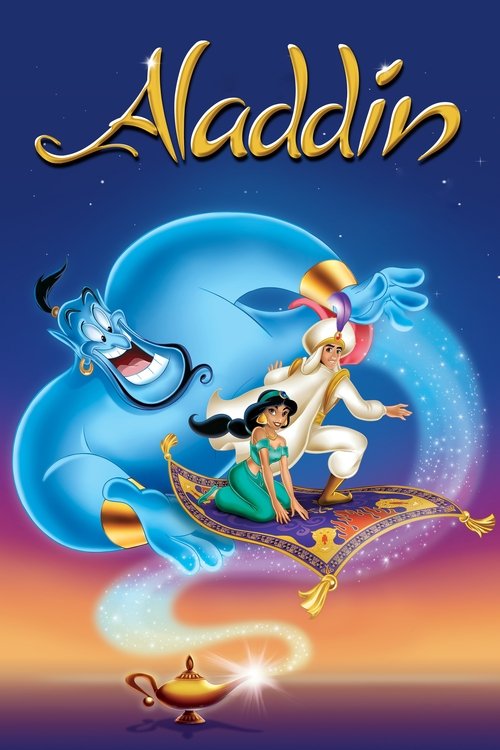
Aladdin - Review
A Whole New World of Animation: A Review of Disney's "Aladdin" (1992)
Step aside, princesses and princes! Prepare to be transported to Agrabah, a vibrant and chaotic city teeming with magic, adventure, and a healthy dose of Disney charm. 1992's "Aladdin" isn't just another animated film; it's a dazzling spectacle of animation, music, and storytelling that continues to captivate audiences decades after its release. From the infectious energy of Robin Williams' Genie to the timeless romance between Aladdin and Jasmine, this film is a treasure trove of memorable moments. But does the magic still hold up today? Let's delve into the shimmering sands and uncover the gems within this animated masterpiece.
Plot: A Magic Carpet Ride of Adventure
The story of "Aladdin" is a classic rags-to-riches tale, spiced with a touch of forbidden romance and a healthy dose of villainous scheming. In the bustling city of Agrabah, we meet Aladdin, a "diamond in the rough" street urchin with a heart of gold. He survives by his wits and the occasional stolen loaf of bread, accompanied by his loyal monkey companion, Abu. Meanwhile, Princess Jasmine, chafing under the restrictive laws of her kingdom, longs for freedom and a chance to choose her own destiny. She is bound by law to marry a prince, a prospect she finds utterly unappealing.
Their paths collide in the crowded marketplace, sparking an instant connection. However, their budding romance is quickly thwarted by the machinations of Jafar, the power-hungry Grand Vizier. Jafar seeks to acquire a magic lamp hidden within the Cave of Wonders, a lamp said to grant its possessor three wishes. Unfortunately for Jafar, only "a diamond in the rough" can enter the cave. He manipulates Aladdin into retrieving the lamp for him, but Aladdin, with Abu's help, manages to escape with the lamp and unwittingly unleashes the Genie within.
The Genie, voiced with unparalleled energy by Robin Williams, grants Aladdin three wishes. Aladdin, initially hesitant, uses his first wish to become Prince Ali Ababwa, hoping to win Jasmine's heart. As Prince Ali, he attempts to woo Jasmine, but she sees through his facade and is more impressed by the genuine kindness he showed her in the marketplace. Jafar, suspicious of Prince Ali, discovers Aladdin's true identity and steals the lamp. He uses his wishes to become Sultan and then the most powerful sorcerer in the world. Aladdin, with the help of Jasmine, Abu, and the Genie, must find a way to defeat Jafar and reclaim the lamp before Agrabah is plunged into eternal darkness.
The plot is relatively straightforward, drawing inspiration from the Arabian Nights tales. However, it's the execution that elevates it. The pacing is brisk, the stakes are high, and the humor is perfectly balanced with moments of genuine emotion. The film masterfully blends action, adventure, romance, and comedy, creating a captivating narrative that appeals to audiences of all ages.
Characters: A Cast of Memorable Personalities
The success of "Aladdin" hinges not only on its engaging plot but also on its memorable and well-developed characters:
- Aladdin: A street-smart and resourceful young man with a good heart. He's not perfect; he makes mistakes and is tempted by power, but ultimately, he chooses what's right. His journey is one of self-discovery and learning to be true to himself.
- Princess Jasmine: A strong-willed and independent princess who refuses to be a passive damsel in distress. She is intelligent, compassionate, and determined to shape her own destiny. She challenges the traditions of her kingdom and fights for her right to choose her own husband.
- Genie: The scene-stealing, wish-granting, shape-shifting Genie is the heart and soul of the film. Robin Williams' improvisational performance brings the Genie to life with unmatched energy and humor. He's not just a magical being; he's a friend and confidante to Aladdin, offering him guidance and support.
- Jafar: The cunning and ambitious Grand Vizier, Jafar, is a classic Disney villain. He's power-hungry, ruthless, and willing to stop at nothing to achieve his goals. His serpentine appearance and sinister voice perfectly embody his villainous nature.
- Iago: Jafar's sarcastic and squawking parrot sidekick, Iago, provides comic relief while also serving as Jafar's loyal (albeit often reluctant) accomplice. Gilbert Gottfried's voice performance is perfectly suited to the character's grating personality.
- Abu: Aladdin's mischievous monkey companion, Abu, is a constant source of both trouble and humor. He's fiercely loyal to Aladdin and often provides crucial assistance in their adventures.
- Sultan: Jasmine's well-meaning but somewhat clueless father, the Sultan, is a figure of authority who ultimately wants what's best for his daughter and his kingdom.
Each character is distinct and contributes to the overall dynamic of the film. The relationships between the characters, particularly between Aladdin and Jasmine and between Aladdin and the Genie, are central to the story's emotional core.
Direction: A Masterful Blend of Animation and Storytelling
Ron Clements and John Musker, the directing duo behind "The Little Mermaid" and "The Princess and the Frog," bring their signature blend of humor, heart, and visual flair to "Aladdin." They expertly balance the fantastical elements of the story with relatable human emotions. The directors create a world that feels both exotic and familiar, drawing inspiration from Arabian culture while still maintaining a distinctly Disney aesthetic.
Clements and Musker's direction is particularly evident in the film's action sequences. The magic carpet ride through the Cave of Wonders, the chase through the streets of Agrabah, and the final confrontation with Jafar are all expertly choreographed and visually stunning. They utilize dynamic camera angles and fluid animation to create a sense of excitement and momentum.
Furthermore, the directors allowed Robin Williams significant creative freedom in his performance as the Genie. This resulted in a unique and improvisational performance that set "Aladdin" apart from other animated films. Williams' ad-libs and pop culture references added a layer of contemporary humor that resonated with audiences.
Cinematography: A Visual Feast for the Eyes
"Aladdin" is a visual masterpiece, showcasing the artistry and technical prowess of Disney's animation team. The film's vibrant color palette, intricate character designs, and stunning backgrounds create a visually immersive experience. The animators drew inspiration from Persian miniature paintings and Islamic architecture, resulting in a unique and visually rich aesthetic.
The film's use of perspective and depth is particularly impressive. The animators create a sense of vastness and scale in the city of Agrabah, while also allowing for intimate and emotionally resonant close-ups of the characters. The magic carpet ride sequence is a prime example of the film's visual ingenuity, showcasing the animators' ability to create a sense of movement and freedom.
The animation of the Genie is particularly noteworthy. The animators had to create a character that could transform into virtually anything, and they did so with remarkable creativity and skill. The Genie's fluidity and expressiveness are a testament to the talent of the animation team.
Performances: A Stellar Voice Cast
The voice cast of "Aladdin" is exceptional, bringing the characters to life with depth and nuance:
- Robin Williams (Genie): Williams' performance as the Genie is legendary. His improvisational skills and boundless energy transformed the character into a cultural icon. He infuses the Genie with humor, heart, and a touch of melancholy, making him one of the most beloved characters in Disney history.
- Scott Weinger (Aladdin): Weinger provides a charming and relatable voice to Aladdin. He captures the character's youthful energy and earnestness, making him a sympathetic and likable protagonist.
- Linda Larkin (Jasmine): Larkin's voice performance as Jasmine is strong and independent. She conveys the character's intelligence and determination, making her a believable and inspiring princess.
- Jonathan Freeman (Jafar): Freeman's performance as Jafar is chilling and menacing. He perfectly captures the character's cunning and ambition, making him a truly formidable villain.
- Gilbert Gottfried (Iago): Gottfried's voice performance as Iago is grating and hilarious. He brings a unique comedic energy to the character, making him a memorable and often frustrating sidekick.
The entire voice cast works together seamlessly, creating a cohesive and engaging ensemble. Their performances elevate the film's storytelling and contribute significantly to its overall success.
Themes and Messages: More Than Just a Wish
"Aladdin" explores several important themes and messages that resonate with audiences:
- Being True to Yourself: Aladdin's journey is about discovering his true identity and learning to be confident in who he is, regardless of his social status. He learns that true worth comes from within, not from external validation or magical wishes.
- Freedom and Choice: Jasmine's desire for freedom and her right to choose her own destiny is a central theme of the film. She challenges the restrictive traditions of her kingdom and fights for her independence.
- The Corrupting Influence of Power: Jafar's pursuit of power ultimately leads to his downfall. The film demonstrates that unchecked ambition can corrupt even the most intelligent and capable individuals.
- Friendship and Loyalty: The bonds of friendship between Aladdin, Abu, and the Genie are essential to the story's emotional core. The film emphasizes the importance of loyalty and support in overcoming adversity.
- Social Justice: The movie, in its own way, deals with social justice, and the contrast between the lives of Aladdin and Jasmine highlights the disparity between the rich and the poor.
These themes are presented in a way that is accessible and engaging for audiences of all ages. "Aladdin" is not just a fun and entertaining film; it also offers valuable lessons about self-acceptance, freedom, and the importance of integrity.
Comparison: A Disney Renaissance Gem
"Aladdin" is often considered one of the crown jewels of the Disney Renaissance, a period of renewed success and creativity for the studio. It shares many similarities with other films from this era, such as "The Little Mermaid" and "Beauty and the Beast," including:
- Strong Female Lead: Like Ariel and Belle, Jasmine is a strong and independent female character who challenges societal norms.
- Memorable Villain: Jafar is a classic Disney villain in the mold of Ursula and Gaston.
- Catchy Musical Numbers: "Aladdin" features a soundtrack filled with memorable and award-winning songs, composed by Alan Menken with lyrics by Howard Ashman and Tim Rice.
- Themes of Self-Discovery: All three films explore themes of self-discovery and the importance of being true to oneself.
However, "Aladdin" also stands out from other Disney films due to its unique setting, its fast-paced action sequences, and, of course, Robin Williams' unforgettable performance as the Genie. While "The Little Mermaid" has a more fairytale-like atmosphere, and "Beauty and the Beast" leans into its gothic romance, "Aladdin" is distinctly an adventure story with comedic elements. In comparison to the director's previous work, the film has a faster pace than "The Little Mermaid," and the comedic elements are much more prominent.
Criticisms: A Few Grains of Sand in the Treasure
While "Aladdin" is widely praised, it's not without its criticisms:
- Cultural Stereotypes: Some critics have argued that the film perpetuates certain stereotypes about Arabian culture. The depiction of Agrabah as a chaotic and exotic city, and the portrayal of some of the characters, have been criticized as being insensitive and inaccurate. While inspired by Arabian culture, it's important to remember that Agrabah is a fictional place. However, the film could have benefitted from more nuanced and respectful representations.
- Jafar's Design: Jafar's design, while effective in conveying his villainous nature, has also been criticized for being somewhat stereotypical in its portrayal of Middle Eastern features.
- Dependence on Robin Williams: While Williams' performance is undoubtedly a highlight of the film, some argue that the film relies too heavily on his improvisational humor, potentially overshadowing other aspects of the story. While the Genie is integral to the film, some of the jokes may not age well for some viewers.
These criticisms are important to consider when evaluating "Aladdin." While the film is a beloved classic, it's essential to acknowledge its flaws and to engage in critical discussions about its cultural representations.
Conclusion: A Timeless Classic That Still Shines
Despite some valid criticisms, "Aladdin" remains a timeless classic that continues to delight audiences with its dazzling animation, memorable characters, and captivating story. Robin Williams' performance as the Genie is a tour de force, and the film's themes of self-discovery, freedom, and the importance of integrity resonate deeply. While some of the cultural representations may be problematic, the film's overall message of hope and empowerment is ultimately positive and uplifting.
"Aladdin" is a testament to the power of animation to transport us to new worlds and to tell stories that touch our hearts. It's a film that can be enjoyed by audiences of all ages, and its legacy as one of Disney's greatest achievements is well-deserved. It's a whole new world indeed, one worth revisiting again and again.
Rating: 9.5/10