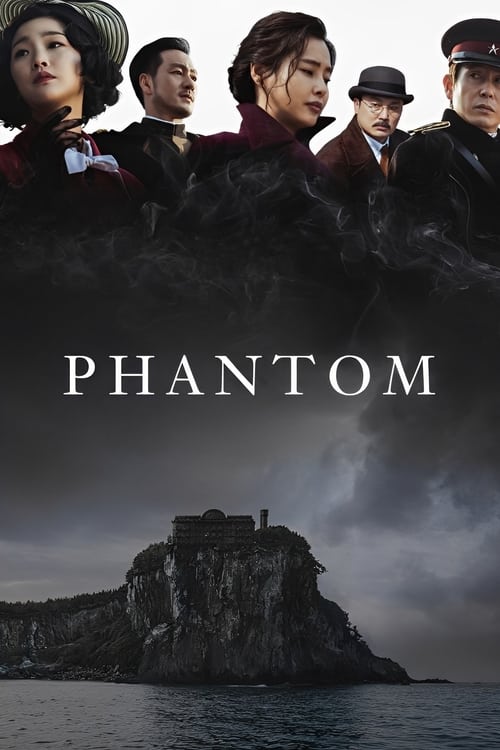
Phantom - Review
"Phantom" (2023): A Gripping Spy Thriller in Occupied Korea
Phantom, released in January 2023, plunges viewers into the treacherous world of espionage in 1933 Gyeongseong, Korea, under the iron fist of Japanese occupation. This action-packed thriller, directed by Lee Hae-young, masterfully blends historical context with heart-pounding suspense, delivering a compelling narrative that keeps you guessing until the very end. With a stellar cast and a visually stunning presentation, Phantom attempts to elevate the spy genre, though it occasionally stumbles under the weight of its own ambitions.
Plot: A Web of Suspicion and Betrayal
The film's premise is simple yet effective: five individuals within the Japanese Government-General of Korea are suspected of being "Phantom," a notorious spy for the anti-Japanese resistance. When a high-ranking official is assassinated, the Japanese authorities, led by the ruthless Captain Kaito, played with chilling intensity by Park Hae-soo, lock down the Government-General and initiate a brutal investigation to unmask the Phantom. Each suspect is subjected to intense interrogation and surveillance, their pasts scrutinized, and their loyalties questioned. The suspects include: Park Cha-kyung (Lee Hanee), a courageous and resourceful secretary; Murayama Junji (Sol Kyung-gu), a Japanese police officer haunted by his past; Baek-ho (Kim Dong-hee), a timid but potentially deceptive cipher officer; Chief Cheon Gye-jang (Seo Hyun-woo), a high-ranking official with a hidden agenda; and Yoo-rim (Park So-dam), a sharp-tongued and enigmatic barmaid.
As the investigation unfolds, alliances shift, secrets are revealed, and the true identity of Phantom becomes increasingly elusive. The plot thickens with intricate twists and turns, keeping the audience on the edge of their seats as they try to decipher who among these individuals is the true mastermind behind the resistance movement. Flashbacks are strategically used to provide glimpses into the characters' motivations and backstories, adding layers of complexity to their personalities and making their actions more understandable. The film expertly uses red herrings, planting seeds of doubt about each character, making it difficult to discern who is truly loyal to whom.
However, the plot occasionally suffers from its own complexity. Some of the twists, while intended to be surprising, feel somewhat convoluted and require close attention to follow. The sheer number of characters with potentially hidden agendas can become overwhelming at times, making it challenging to keep track of everyone's motivations and relationships. Despite these minor shortcomings, the overall plot of Phantom is engaging and well-paced, delivering a satisfyingly suspenseful experience.
Characters: A Cast of Compelling Individuals
Phantom boasts a remarkable ensemble cast, each delivering a nuanced and captivating performance. Lee Hanee shines as Park Cha-kyung, portraying her with a perfect balance of strength, vulnerability, and unwavering determination. Her character is not merely a damsel in distress; she is a resourceful and intelligent woman who uses her wit and courage to navigate the treacherous political landscape. Sol Kyung-gu delivers a powerful performance as Murayama Junji, a Japanese police officer grappling with his conscience and torn between his duty and his growing sympathy for the Korean people. His internal conflict is palpable, and his portrayal of a man caught between two worlds is both compelling and heartbreaking. Park Hae-soo is chillingly effective as Captain Kaito, the ruthless and unwavering enforcer of Japanese authority. His cold demeanor and unwavering dedication to his mission make him a formidable antagonist, and his scenes with the suspects are filled with tension and suspense.
Kim Dong-hee brings a subtle intensity to his role as Baek-ho, the cipher officer. While seemingly meek and unassuming, Baek-ho's actions hint at a hidden depth and a potential for deception. Seo Hyun-woo delivers a solid performance as Chief Cheon Gye-jang, a character shrouded in mystery and suspicion. His motivations remain unclear for much of the film, adding to the overall sense of intrigue. Park So-dam, though having a smaller role compared to the others, makes a lasting impression as Yoo-rim, the barmaid with a sharp tongue and a hidden agenda. Her character adds a touch of levity to the otherwise dark and serious tone of the film.
While the character development is generally strong, some characters could have benefited from more fleshed-out backstories. For instance, understanding more about Yoo-rim's motivations and past could have added more depth to her character and made her actions more impactful. However, overall, the characters in Phantom are well-developed and compelling, contributing significantly to the film's overall success.
Direction: Lee Hae-young's Masterful Touch
Lee Hae-young's direction in Phantom is nothing short of masterful. He expertly crafts a tense and suspenseful atmosphere, keeping the audience on the edge of their seats throughout the film. His use of close-ups and dramatic angles heightens the emotional impact of key scenes, drawing the viewer deeper into the characters' experiences. The pacing of the film is well-balanced, allowing for moments of intense action interspersed with quieter, more reflective scenes that explore the characters' inner turmoil.
Lee Hae-young demonstrates a keen eye for detail, meticulously recreating the atmosphere of 1930s Gyeongseong. The costumes, sets, and props are all meticulously crafted, adding to the film's authenticity and immersing the viewer in the historical setting. He also effectively uses the film's visual elements to enhance the storytelling, employing symbolism and visual metaphors to convey deeper meanings and themes. The action sequences are expertly choreographed and executed, delivering thrilling moments of adrenaline-pumping excitement without sacrificing realism. Lee Hae-young avoids gratuitous violence, focusing instead on the strategic and tactical aspects of the fight scenes.
However, at times, the director's ambition to create a visually stunning and complex narrative leads to moments where the film feels slightly over-stylized. Some of the action sequences, while visually impressive, occasionally border on the unrealistic, detracting slightly from the film's overall sense of authenticity. Nevertheless, Lee Hae-young's direction in Phantom is generally excellent, showcasing his talent for crafting compelling and visually stunning thrillers.
Cinematography: A Visual Feast
The cinematography in Phantom is a visual feast, showcasing the beauty and brutality of 1930s Gyeongseong. The film is shot with a keen eye for detail, capturing the intricate architecture, the bustling streets, and the oppressive atmosphere of the occupied city. The use of light and shadow is particularly effective, creating a sense of mystery and intrigue. The color palette is muted and desaturated, reflecting the somber mood and the harsh realities of life under Japanese rule. However, vibrant splashes of color are strategically used to highlight key moments and emphasize the characters' emotions.
The camera work is dynamic and engaging, employing a variety of techniques to keep the audience visually stimulated. Close-ups are used to capture the characters' emotions, while wide shots are used to establish the setting and create a sense of scale. The use of slow motion and fast motion is also effective in enhancing the impact of key scenes. The cinematography seamlessly blends together to create a visually stunning and immersive experience that enhances the storytelling and adds to the film's overall impact.
The visual effects are seamlessly integrated into the film, enhancing the realism of the action sequences and adding to the overall sense of scale. The use of CGI is subtle and unobtrusive, avoiding the pitfall of creating overly artificial or cartoonish visuals. The attention to detail in the visual effects is commendable, contributing significantly to the film's overall sense of authenticity.
Performances: A Stellar Ensemble Cast
The success of Phantom hinges on the strength of its performances, and the cast delivers admirably. As mentioned previously, Lee Hanee, Sol Kyung-gu, and Park Hae-soo stand out with their nuanced and captivating portrayals. Lee Hanee brings a fierce determination and vulnerability to her role as Park Cha-kyung, making her a compelling and relatable protagonist. Sol Kyung-gu delivers a powerful performance as Murayama Junji, conveying the character's internal conflict with subtlety and depth. Park Hae-soo is chillingly effective as Captain Kaito, embodying the ruthlessness and unwavering dedication of the Japanese authorities.
The supporting cast also delivers strong performances, adding depth and complexity to the film's ensemble. Kim Dong-hee brings a subtle intensity to his role as Baek-ho, hinting at a hidden depth beneath his seemingly meek exterior. Seo Hyun-woo is enigmatic and intriguing as Chief Cheon Gye-jang, keeping the audience guessing about his true motivations. Park So-dam, though having a smaller role, makes a lasting impression as Yoo-rim, adding a touch of levity and mystery to the film.
The chemistry between the actors is palpable, adding to the film's overall sense of realism. The interactions between the suspects are filled with tension and suspicion, while the relationships between the allies are characterized by trust and loyalty. The actors' ability to convey these complex emotions adds depth and nuance to their characters, making them more relatable and engaging.
Themes and Messages: Resistance, Identity, and Sacrifice
Phantom explores several important themes, including resistance, identity, and sacrifice. The film is a powerful reminder of the struggles faced by the Korean people during the Japanese occupation, highlighting their courage, resilience, and unwavering determination to fight for their freedom. The theme of resistance is central to the film, as the characters risk their lives to defy the Japanese authorities and fight for their independence.
The film also explores the theme of identity, as the characters grapple with questions of who they are and where they belong. Murayama Junji, in particular, embodies this theme, as he struggles to reconcile his Japanese identity with his growing sympathy for the Korean people. The film also raises questions about the nature of loyalty and betrayal, as the characters are forced to make difficult choices that test their allegiances.
The theme of sacrifice is also prominent in Phantom, as the characters are willing to risk everything, including their lives, for the sake of their cause. The film emphasizes the importance of selflessness and dedication in the face of adversity, highlighting the sacrifices made by those who fought for Korean independence.
While the film's themes are powerful and relevant, they are sometimes presented in a somewhat heavy-handed manner. The film occasionally resorts to melodrama to convey its message, which can detract from its overall impact. However, despite these minor shortcomings, the themes and messages of Phantom are ultimately thought-provoking and inspiring.
Comparison to Other Films
Phantom can be compared to other spy thrillers set in historical contexts, such as Lust, Caution (2007) and The Age of Shadows (2016). Like these films, Phantom explores the themes of resistance, identity, and betrayal within the context of political oppression. However, Phantom distinguishes itself with its focus on a group of suspects, creating a "whodunit" element that adds to the suspense. The film also features more action sequences than Lust, Caution, making it a more action-oriented thriller. Compared to The Age of Shadows, Phantom is arguably less nuanced in its portrayal of the historical context, focusing more on the suspense and action elements.
Lee Hae-young's previous work, such as Believer (2018), also demonstrates his talent for crafting stylish and suspenseful thrillers. Like Believer, Phantom features a strong ensemble cast, intricate plot twists, and visually stunning cinematography. However, Phantom is arguably more ambitious in its scope and scale, tackling a complex historical context and exploring deeper thematic concerns.
Positive Aspects and Constructive Criticism
Phantom excels in several areas. The plot is engaging and suspenseful, keeping the audience on the edge of their seats. The characters are well-developed and compelling, brought to life by a stellar ensemble cast. Lee Hae-young's direction is masterful, crafting a tense and visually stunning thriller. The cinematography is a visual feast, capturing the beauty and brutality of 1930s Gyeongseong. The themes and messages of the film are thought-provoking and inspiring.
However, Phantom also has some weaknesses. The plot occasionally suffers from its own complexity, with some twists feeling convoluted. Some characters could have benefited from more fleshed-out backstories. The director's ambition to create a visually stunning narrative sometimes leads to moments where the film feels slightly over-stylized. The film's themes are sometimes presented in a somewhat heavy-handed manner.
Conclusion and Rating
Overall, Phantom is a gripping and visually stunning spy thriller that offers a compelling glimpse into the struggles of the Korean people during the Japanese occupation. Despite some minor shortcomings, the film's strengths far outweigh its weaknesses. With its engaging plot, compelling characters, masterful direction, and stellar performances, Phantom is a must-see for fans of the spy genre and those interested in Korean history. It's a stylish, suspenseful, and ultimately satisfying cinematic experience.
Rating: 8.5/10