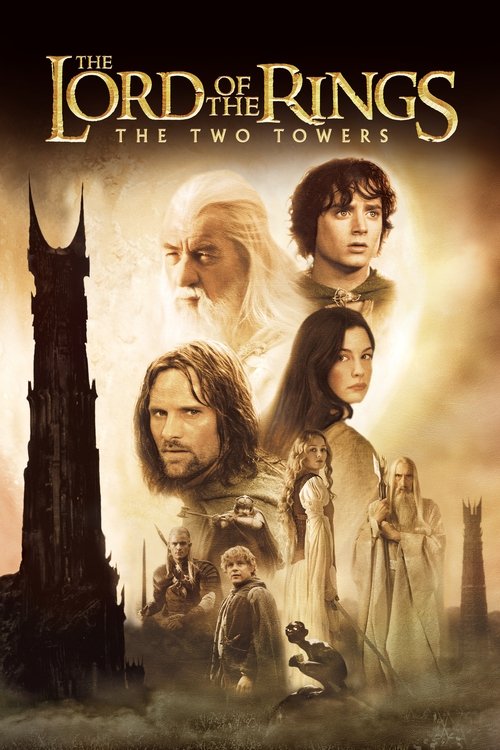
The Lord of the Rings: The Two Towers - Review
The Lord of the Rings: The Two Towers - A Review of Epic Proportions
Peter Jackson's The Lord of the Rings: The Two Towers, the second installment in his monumental adaptation of J.R.R. Tolkien's beloved fantasy epic, arrived in cinemas in 2002 with a weight of expectation heavier than the One Ring itself. Following the success of The Fellowship of the Ring, anticipation was fever pitch, and the film delivered in spades, expanding the scope, deepening the characters, and showcasing a breathtaking battle sequence that redefined cinematic warfare. But does it hold up under closer scrutiny, and how does it fare as a crucial middle chapter in a sprawling narrative?
Plot: Strands of Destiny Unraveling
The Two Towers picks up the story immediately after the shattering of the Fellowship. The film masterfully weaves together three distinct narrative threads, each fraught with peril and pivotal to the overall saga. First, we follow Frodo (Elijah Wood) and Sam (Sean Astin) as they navigate the treacherous Emyn Muil, desperately trying to reach Mordor with the Ring. Their path leads them to Gollum (Andy Serkis), a wretched creature consumed by the Ring's power, who becomes their guide, albeit a dangerously unreliable one. This thread is arguably the most psychologically complex, exploring the corrupting influence of power and the unwavering loyalty of friendship.
The second thread focuses on Aragorn (Viggo Mortensen), Legolas (Orlando Bloom), and Gimli (John Rhys-Davies) as they relentlessly pursue the Uruk-hai, who have captured Merry (Dominic Monaghan) and Pippin (Billy Boyd). Their journey leads them to the kingdom of Rohan, a land on the brink of destruction, besieged by Saruman's (Christopher Lee) forces. This storyline introduces us to King Théoden (Bernard Hill), a once-proud ruler now under the insidious influence of Gríma Wormtongue (Brad Dourif), Saruman's spy. This thread is heavily action-oriented, culminating in the spectacular Battle of Helm's Deep.
Finally, Merry and Pippin's journey takes them through Fangorn Forest, where they encounter Treebeard (John Rhys-Davies), the ancient Ent. Their interaction with Treebeard sparks a crucial shift in the balance of power, eventually leading the Ents to march on Isengard, Saruman's fortress. This thread provides a much-needed dose of wonder and introduces a critical element of Tolkien's ecological message.
The interwoven narratives are expertly handled, creating a sense of constant forward momentum and highlighting the interconnectedness of Middle-earth's fate. However, the frequent switching between storylines can, at times, feel slightly disjointed, particularly for viewers unfamiliar with the source material. A minor criticism, but one worth noting.
Character Analysis: Growth, Temptation, and Redemption
The Two Towers is a character-driven film, exploring the internal struggles and moral dilemmas faced by its protagonists. Frodo's journey is particularly compelling, as he grapples with the Ring's growing influence and his own weakening resolve. Elijah Wood delivers a nuanced performance, portraying Frodo's increasing paranoia and vulnerability with remarkable subtlety. Samwise Gamgee, portrayed with unwavering loyalty and warmth by Sean Astin, remains the heart of the story, providing Frodo with the emotional support he desperately needs. Their relationship is the film's emotional anchor, a testament to the power of friendship and selflessness.
The introduction of Gollum is a masterstroke. Andy Serkis's performance capture work is groundbreaking, bringing this complex and conflicted character to life with astonishing realism. Gollum is not simply a villain; he is a victim, a cautionary tale about the corrupting power of the Ring. His internal struggle, manifested in his conversations with Smeagol, is both fascinating and heartbreaking. He adds layers of moral ambiguity to the narrative and presents a constant threat to Frodo and Sam's mission.
Aragorn's character arc continues to develop in The Two Towers. He is torn between his destiny as the rightful king of Gondor and his own doubts and fears. Viggo Mortensen imbues Aragorn with a regal presence and a quiet strength, showcasing his leadership qualities and his unwavering commitment to protecting the people of Middle-earth. His relationship with Arwen (Liv Tyler), though largely absent from this film, remains a constant source of motivation and hope.
The introduction of King Théoden and Éowyn (Miranda Otto) adds depth to the Rohan storyline. Bernard Hill delivers a powerful performance as Théoden, capturing his transformation from a weak and manipulated ruler to a courageous and inspiring leader. Éowyn's yearning for glory and her frustration with her limited role in Rohan society resonate with modern audiences, making her a compelling and relatable character. Her defiance in the face of overwhelming odds during the Battle of Helm's Deep is a defining moment of the film.
While the character development is generally strong, some characters, such as Legolas and Gimli, are primarily relegated to action roles in this installment. While their banter provides comic relief and their combat skills are impressive, their individual character arcs are less pronounced compared to other members of the Fellowship.
Direction and Cinematography: A Visual Masterpiece
Peter Jackson's direction in The Two Towers is nothing short of masterful. He skillfully balances the multiple storylines, maintaining a sense of momentum and building tension throughout the film. His ability to bring Tolkien's world to life with such fidelity and grandeur is truly remarkable. The film is visually stunning, with breathtaking landscapes, meticulously designed costumes and sets, and groundbreaking special effects.
The cinematography, by Andrew Lesnie, is simply superb. The sweeping shots of the New Zealand landscape, doubling as Middle-earth, are awe-inspiring, capturing the vastness and beauty of the world. The use of natural light and shadow creates a sense of realism and depth, immersing the viewer in the story. The battle sequences are particularly well-shot, with dynamic camera movements and impressive visual effects that capture the chaos and intensity of the fighting.
The visual effects in The Two Towers were groundbreaking for their time, particularly the creation of Gollum. Weta Digital's work on Gollum set a new standard for performance capture and CGI character animation. Gollum feels like a real, living creature, with believable emotions and mannerisms. The scale of the armies and the grandeur of the landscapes are also rendered with impressive detail and realism.
While the visual effects hold up remarkably well, some of the CGI elements, particularly in the battle sequences, can occasionally look slightly dated by today's standards. However, this is a minor quibble in an otherwise visually stunning film.
Performances: A Cast of Legends
The ensemble cast of The Two Towers delivers uniformly excellent performances. Elijah Wood and Sean Astin continue to shine as Frodo and Sam, respectively, capturing the emotional core of their relationship with sensitivity and depth. Andy Serkis's performance as Gollum is a tour de force, a groundbreaking achievement in performance capture. Viggo Mortensen embodies Aragorn's strength and nobility with quiet authority. Bernard Hill delivers a powerful and moving performance as King Théoden, while Miranda Otto brings depth and complexity to the role of Éowyn.
Christopher Lee is chillingly effective as Saruman, conveying his intelligence and ruthlessness with subtle menace. Brad Dourif is suitably slimy and treacherous as Gríma Wormtongue. John Rhys-Davies, in addition to voicing Treebeard, provides a solid performance as Gimli, although his character is less developed in this installment compared to the others.
The casting choices throughout the film are impeccable, with each actor perfectly suited to their role. The chemistry between the actors is palpable, creating a sense of camaraderie and authenticity that enhances the overall viewing experience.
Themes and Messages: Hope, Courage, and the Power of Friendship
The Two Towers explores a range of profound themes and messages. The corrupting influence of power is a central theme, exemplified by the Ring's effect on Frodo and Gollum. The film also highlights the importance of hope and courage in the face of overwhelming odds. The characters are constantly confronted with seemingly insurmountable challenges, but they persevere, driven by their belief in a better future.
The power of friendship and loyalty is another key theme. Frodo and Sam's unwavering bond is the film's emotional heart, demonstrating the importance of companionship and support in times of adversity. The film also explores the themes of redemption and forgiveness, as seen in Gollum's complex and conflicted character.
Tolkien's ecological message is also present in The Two Towers, particularly in the Ents' march on Isengard. The destruction of the forest by Saruman's industrialization serves as a cautionary tale about the dangers of unchecked progress and the importance of respecting the natural world.
Ultimately, The Two Towers is a story about good versus evil, but it is also a story about the complexities of human nature and the enduring power of hope, courage, and friendship.
Comparison to Other Films and Works
The Lord of the Rings: The Two Towers stands as a high watermark in the fantasy film genre. Its scale, scope, and ambition are unmatched, and its influence can be seen in countless films that have followed. Compared to other fantasy epics, such as Conan the Barbarian or Willow, The Two Towers is far more complex and nuanced, with deeper characters and more profound themes.
Compared to Peter Jackson's previous work, The Two Towers represents a significant step up in terms of visual effects and storytelling. While Jackson had previously directed successful horror and comedy films, The Lord of the Rings trilogy established him as a master filmmaker capable of handling large-scale productions with remarkable skill and artistry.
The Battle of Helm's Deep is often compared to other famous battle sequences in film history, such as the siege of Minas Tirith in The Return of the King, the battle of Stirling in Braveheart, and the storming of the beaches of Normandy in Saving Private Ryan. While each of these sequences is impressive in its own right, the Battle of Helm's Deep stands out for its combination of epic scale, visceral action, and emotional resonance.
Positive Aspects and Constructive Criticism
The Two Towers is a triumph of filmmaking, boasting stunning visuals, compelling characters, and a gripping storyline. The film's strengths include:
- Groundbreaking visual effects, particularly the creation of Gollum.
- Spectacular battle sequences, most notably the Battle of Helm's Deep.
- Excellent performances from the entire cast.
- Faithful adaptation of Tolkien's source material.
- Exploration of profound themes and messages.
However, the film is not without its flaws. Some minor criticisms include:
- The frequent switching between storylines can occasionally feel disjointed.
- Some CGI elements can look slightly dated by today's standards.
- The character development of Legolas and Gimli is less pronounced compared to other characters.
Despite these minor flaws, The Two Towers remains a remarkable achievement in filmmaking and a worthy successor to The Fellowship of the Ring.
Conclusion and Rating
The Lord of the Rings: The Two Towers is a cinematic masterpiece, a breathtaking and emotionally resonant adaptation of Tolkien's beloved novel. Peter Jackson's direction is masterful, the performances are superb, and the visual effects are groundbreaking. While the film has a few minor flaws, its strengths far outweigh its weaknesses. The Two Towers is a must-see for fans of fantasy, action, and adventure films. It's a film that stays with you long after the credits roll, prompting reflection on the nature of good and evil, the importance of hope and courage, and the enduring power of friendship.
Rating: 9.5/10