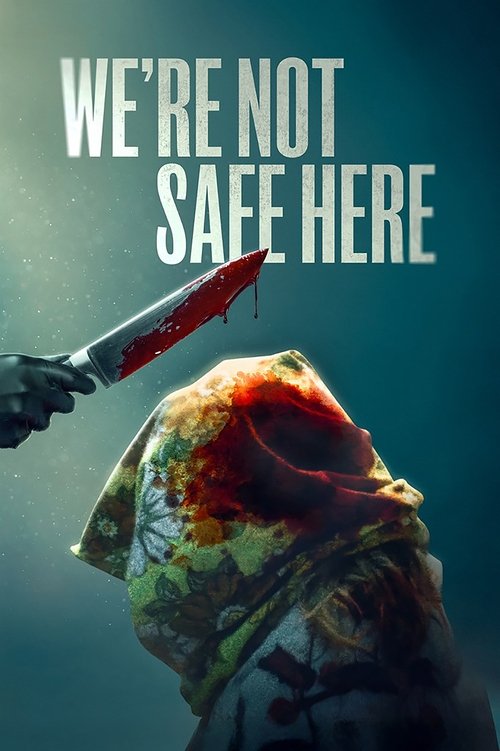
We're Not Safe Here - Review
We're Not Safe Here: A Review of 2025's Haunting Horror Drama
The air crackles with unease. Shadows dance where they shouldn't. And the line between reality and nightmare blurs with terrifying precision. These are the sensations that linger long after the credits roll on "We're Not Safe Here," the latest offering from director Anya Sharma, a film that burrows under your skin and refuses to let go. Released on August 22nd, 2025, this horror drama isn't just about jump scares and gore; it's a psychological exploration of fear, trauma, and the insidious power of the unknown. But does it succeed in its ambitious goals? Let's delve into the chilling depths of "We're Not Safe Here."
Plot: A Descent into Madness
The film centers around Clara (played with captivating vulnerability by rising star Maya Thompson), a young woman who mysteriously disappears for several weeks. When she finally resurfaces, she's a shadow of her former self, haunted by fragmented memories and plagued by an inexplicable dread. Her only confidante is her childhood friend, Sarah (portrayed by veteran actress Eleanor Vance), a pragmatic and grounded individual who initially dismisses Clara's story as the product of trauma. However, as Clara's nightmares begin to manifest in their waking lives, Sarah is forced to confront the horrifying possibility that Clara's ordeal was far more than a simple disappearance.
The narrative unfolds as a slow-burn mystery, gradually revealing the nature of the "dark force" that pursues Clara and Sarah. It's not a monster in the traditional sense, but rather a malevolent entity that feeds on fear and manipulates reality to its whim. The film cleverly avoids exposition dumps, instead opting to reveal information through unsettling visions, cryptic clues, and the characters' increasingly desperate attempts to understand what's happening to them. This approach keeps the audience constantly guessing, creating a palpable sense of paranoia and dread.
One of the plot's strengths lies in its ambiguity. The origins and motives of the dark force remain shrouded in mystery, leaving room for interpretation and fueling the film's unsettling atmosphere. Is it a supernatural entity? A manifestation of Clara's own fractured psyche? Or something else entirely? The film doesn't provide easy answers, encouraging viewers to grapple with the ambiguity and draw their own conclusions.
However, the plot isn't without its flaws. At times, the pacing feels uneven, with certain scenes lingering longer than necessary while others feel rushed. The final act, while visually stunning and emotionally impactful, suffers from a slight lack of clarity. Some viewers may find the open-ended conclusion frustrating, while others will appreciate its ambiguity and thematic resonance.
Characters: Driven by Fear and Loyalty
The strength of "We're Not Safe Here" lies not only in its chilling plot but also in its well-developed and relatable characters. Clara is a compelling protagonist, her vulnerability and fear palpable. Maya Thompson delivers a tour-de-force performance, capturing Clara's emotional turmoil with nuance and authenticity. We see her transformation from a confident young woman to a terrified survivor, her sanity slowly eroding under the weight of her experiences. Thompson's performance is particularly noteworthy for its subtlety; she conveys Clara's inner torment through subtle gestures, fleeting expressions, and haunted eyes.
Eleanor Vance shines as Sarah, the pragmatic friend who initially struggles to believe Clara's story but ultimately becomes her staunchest ally. Sarah's skepticism provides a grounding presence in the face of the increasingly surreal events, making her eventual acceptance of the supernatural threat all the more impactful. Vance imbues Sarah with a quiet strength and unwavering loyalty, making her a character that the audience can root for. Her portrayal of a woman grappling with disbelief and fear is both believable and compelling.
The supporting characters, while less prominent, are equally well-drawn. Detective Miller (played by veteran character actor James Harding) is a weary and cynical police officer who investigates Clara's disappearance. His initial skepticism and gradual realization that something far more sinister is at play add another layer of tension to the narrative. Harding brings a world-weariness to the role, making Miller a believable and sympathetic figure.
However, the film could have benefited from further exploration of the dark force itself. While its presence is felt throughout the film, its motivations and origins remain somewhat vague. A deeper understanding of the entity could have added another layer of complexity to the narrative and made it even more terrifying.
Direction: A Masterclass in Atmosphere
Anya Sharma proves herself to be a master of atmosphere in "We're Not Safe Here." Her direction is deliberate and precise, creating a sense of unease and dread that permeates every scene. She skillfully uses lighting, sound design, and camera angles to heighten the tension and create a truly immersive horror experience.
Sharma's use of long takes and slow zooms creates a sense of claustrophobia and disorientation, mirroring Clara's own mental state. The film is visually stunning, with its stark and unsettling imagery. The use of shadows and darkness is particularly effective, creating a sense of menace that lurks just beyond the edges of the frame.
One of Sharma's greatest strengths is her ability to build suspense without relying on cheap jump scares. Instead, she focuses on creating a sense of psychological dread, slowly ratcheting up the tension until it becomes almost unbearable. This approach is far more effective than relying on predictable horror tropes, making "We're Not Safe Here" a truly unsettling and memorable experience.
While Sharma's direction is largely impeccable, there are moments where the pacing falters. Certain scenes could have been trimmed to maintain a tighter narrative flow. However, these minor flaws are easily forgiven in light of the film's overall excellence.
Cinematography: Painting a Picture of Fear
The cinematography, expertly handled by veteran DP David Chen, is a crucial element in creating the film's unsettling atmosphere. Chen utilizes a muted color palette, dominated by grays, blues, and blacks, to create a sense of bleakness and despair. The use of natural light is particularly effective, casting long shadows and highlighting the characters' vulnerability.
Chen's camera work is both elegant and unsettling. He frequently uses close-ups to capture the characters' emotional states, allowing the audience to connect with their fear and desperation. He also employs wide shots to emphasize the characters' isolation and vulnerability in the face of the unknown.
The film's visual effects, while sparingly used, are seamlessly integrated into the narrative. They are used to enhance the film's sense of realism, rather than to distract from it. The scenes depicting the dark force's manipulation of reality are particularly effective, blurring the line between the real and the surreal in a truly unsettling way.
Overall, the cinematography of "We're Not Safe Here" is a masterclass in visual storytelling, perfectly complementing the film's themes and creating a truly immersive and terrifying experience.
Performances: Anchoring the Horror in Reality
As mentioned earlier, Maya Thompson delivers a breakout performance as Clara. She embodies the character's vulnerability, fear, and resilience with remarkable skill. Her performance is both nuanced and emotionally powerful, making Clara a character that the audience can truly empathize with.
Eleanor Vance is equally impressive as Sarah. She brings a groundedness and strength to the role, making Sarah a believable and relatable character. Her performance is particularly effective in the scenes where she is forced to confront the reality of the supernatural threat. Vance's portrayal of Sarah's gradual acceptance and unwavering loyalty is both moving and inspiring.
James Harding provides a solid performance as Detective Miller, adding a layer of realism and complexity to the narrative. The supporting cast is also strong, with each actor bringing depth and nuance to their respective roles.
The strength of the performances in "We're Not Safe Here" lies in their authenticity. The actors don't overplay their roles, instead opting for subtle and nuanced portrayals that allow the audience to connect with the characters on a deeper level. This approach makes the film's horror all the more effective, as it feels grounded in reality.
Themes and Messages: Exploring the Nature of Fear
"We're Not Safe Here" is more than just a horror film; it's a psychological exploration of fear, trauma, and the power of belief. The film delves into the ways in which fear can distort our perception of reality and manipulate our minds. It also explores the importance of friendship and loyalty in the face of adversity.
One of the film's central themes is the power of trauma. Clara's experiences have left her deeply scarred, and her trauma manifests in the form of nightmares, hallucinations, and a profound sense of dread. The film suggests that trauma can have a lasting impact on our lives, shaping our perceptions and influencing our behavior.
Another important theme is the power of belief. The dark force in the film feeds on fear and manipulates reality to its whim. The film suggests that our beliefs can shape our reality, and that fear can be a powerful force that can be used against us.
Ultimately, "We're Not Safe Here" is a story about resilience. Despite the horrors they face, Clara and Sarah never give up hope. They fight to protect themselves and each other, demonstrating the power of friendship and loyalty in the face of adversity. The film suggests that even in the darkest of times, hope can still prevail.
Comparisons: Echoes of the Past, a Unique Voice
"We're Not Safe Here" draws inspiration from a variety of sources, including classic horror films like "The Exorcist" and "The Shining," as well as more recent psychological thrillers like "The Babadook" and "Hereditary." However, Anya Sharma manages to create a film that feels both familiar and unique.
Like "The Exorcist," "We're Not Safe Here" explores the themes of possession and the battle between good and evil. However, Sharma's film takes a more psychological approach, focusing on the characters' inner turmoil and the ways in which fear can distort their perception of reality.
Like "The Shining," "We're Not Safe Here" creates a sense of claustrophobia and unease through its use of long takes, slow zooms, and unsettling imagery. However, Sharma's film is more focused on the characters' emotional states and their relationships with each other.
Like "The Babadook" and "Hereditary," "We're Not Safe Here" explores the themes of trauma and grief. However, Sharma's film takes a more ambiguous approach, leaving the audience to interpret the meaning of the events that unfold.
While "We're Not Safe Here" shares similarities with these other films, it ultimately establishes its own unique voice. Sharma's direction is confident and assured, and her film is a testament to her talent as a storyteller.
Positive Aspects: A Triumph of Atmosphere and Performance
"We're Not Safe Here" excels in several key areas:
- Atmosphere: The film creates a palpable sense of dread and unease that permeates every scene.
- Performances: Maya Thompson and Eleanor Vance deliver outstanding performances, anchoring the horror in reality.
- Direction: Anya Sharma's direction is deliberate and precise, creating a truly immersive horror experience.
- Cinematography: David Chen's cinematography is visually stunning, perfectly complementing the film's themes.
- Themes: The film explores complex themes of fear, trauma, and the power of belief.
Constructive Criticism: Minor Flaws in an Otherwise Excellent Film
While "We're Not Safe Here" is a highly effective horror film, it's not without its flaws:
- Pacing: The pacing can be uneven at times, with certain scenes lingering longer than necessary.
- Clarity: The final act suffers from a slight lack of clarity, leaving some viewers feeling frustrated.
- Dark Force Development: The dark force's motivations and origins could have been explored in greater depth.
Conclusion: A Haunting and Memorable Horror Experience
"We're Not Safe Here" is a chilling and thought-provoking horror drama that will stay with you long after the credits roll. Anya Sharma has crafted a truly unsettling and memorable experience, thanks to her masterful direction, the film's stunning cinematography, and the outstanding performances of Maya Thompson and Eleanor Vance. While the film has a few minor flaws, its strengths far outweigh its weaknesses. This is a must-see for fans of psychological horror and those who appreciate films that dare to explore the darker aspects of the human psyche. "We're Not Safe Here" is a welcome addition to the horror genre, proving that true terror lies not in jump scares, but in the chilling exploration of our deepest fears.
Rating: 8.7/10